

What actually happens in the machine's quiet interior when you entrust your most beloved, hand-knitted sweater to technology? It's a question that holds both reverence for craftsmanship and a nagging worry that the soft fibers will lose their shape or become rough beyond recognition. We know you value the hours of diligence and the natural materials inherent in your garments, and that choosing a wool wash cycle is about so much more than just cleanliness; it's an extension of your care for the garment's origin and future.
Today, over 79 percent of European consumers are familiar with the new energy labels introduced in 2021, but when it comes to the actual mechanics behind a gentle wash, confusion often prevails regarding symbols and enzyme-free choices. In this article, you will learn how to use your machine's intelligent functions to preserve your wool sweaters, coats, and vests without compromising the quality of the craftsmanship. We guide you through the art of washing with respect, so that your most valuable natural materials retain their fresh scent and original softness for many years to come.
Key Takeaways
- Understand how the machine's gentle rhythm mimics the artisan's hands to protect wool fibers from unnecessary friction.
- Learn why a modern wool wash cycle is often a safer alternative than hand washing for your most beloved natural materials.
- Discover why choosing enzyme-free detergent is crucial for preserving the protein fibers in your hand-knitted sweater.
- Master the art of drying and shaping your garments flat to ensure they retain their character and fit for years to come.
What is a wool cycle and why is it vital for your garments?
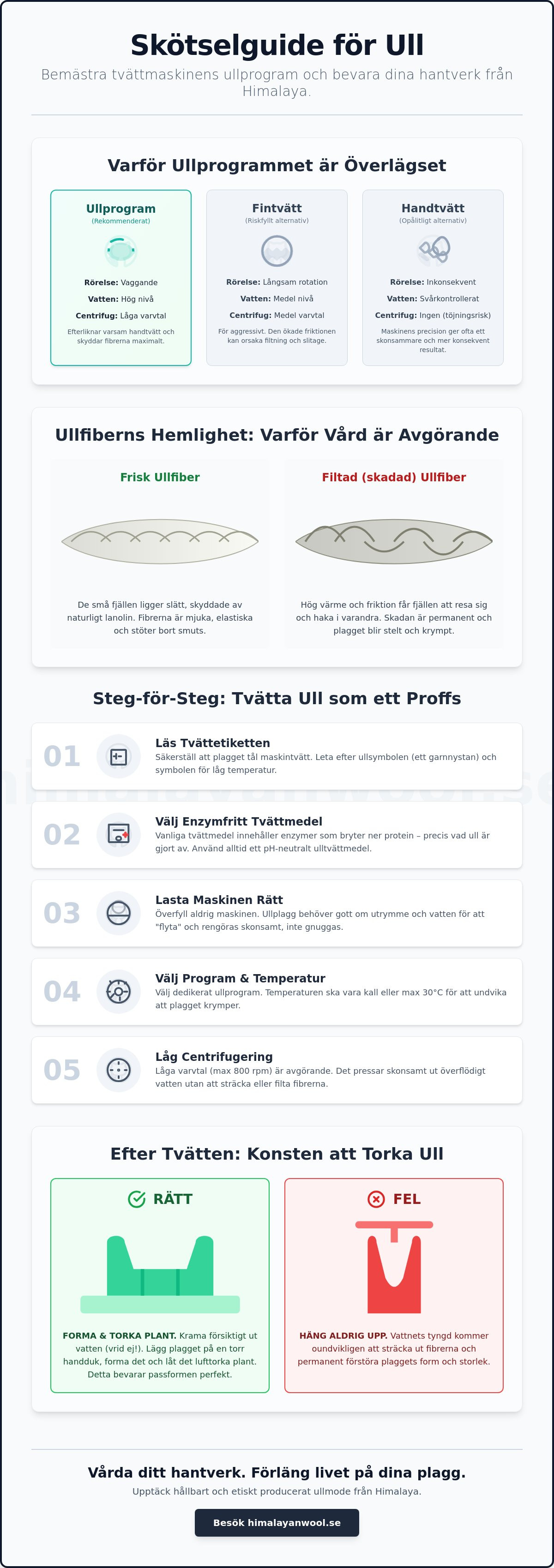
Wool is not like other materials. It is a living fiber that carries memories from rugged mountain slopes and generations of craftsmanship. When you choose a wool wash cycle, it's not just about removing a stain. It's about understanding the gentle rhythm that protects the soul of the fibers. Unlike regular cycles, where the drum rotates with force to beat dirt out of the fabric through mechanical friction, the wool cycle acts as a gentle cradle. It's a slow dance where water and the drum work together to minimize any unnecessary wear and tear.
Many make the mistake of thinking that a delicate cycle is equivalent, but the difference is often the difference between a garment that lasts a lifetime and one that is ruined after one season. Delicate wash still moves significantly more aggressively than wool can tolerate. Guessing between the machine's different settings can quickly turn a magnificent handmade wool jacket from Nepal into a stiff and shrunk memory of its former self. By respecting the mechanical difference, you also honor the hands that once spun and knitted your garment with patience and pride.
The unique structure of wool: Fibers that breathe
Each individual wool fiber is covered with tiny scales, like roof tiles on a house. At too high temperatures or vigorous mechanical processing, these scales lift and interlock, an irreversible process we call felting. Wool's self-cleaning properties mean that the fibers repel dirt and neutralize odors through their natural structure and lanolin content. Lanolin acts as a protective shield that preserves the material's suppleness and luster. When we use a correct wool wash cycle, we ensure that these scales remain flat and that the natural grease is not washed away unnecessarily, which preserves the garment's ability to breathe and warm.
Symbols you need to know on your machine
To navigate correctly among buttons and digital menus, it is fundamental to understand the wash symbols and what they actually promise. The wool symbol, which usually looks like a stylized ball of yarn, is your reassurance. It guarantees that the cycle is calibrated with low temperatures and minimal drum movements to handle the material with the utmost reverence. However, be vigilant for symbols that resemble wool but allow for higher mechanical processing. When caring for your wool clothes from the Himalayas, the journey always begins by reading these small signs. They are the link that connects modern technology with the needs of ancient natural materials.
How does the wool cycle work? The mechanics behind the gentle rhythm
When you choose a wool wash cycle, you activate a sophisticated engineering design created to mimic the gentle hands of an artisan. Many believe that hand washing is always the safest option, but the truth is that modern machines often offer a precision that our own hands lack. The secret lies in how the drum moves. Instead of rotating the garment 360 degrees and allowing it to fall heavily to the bottom, the machine gently rocks the clothes back and forth in a short, calm arc. It's a movement reminiscent of a calm ocean wave, where the material is never subjected to the mechanical stress that otherwise wears out the fibers.
The amount of water also plays a crucial role in this process. A wool cycle uses significantly more water than a regular cotton wash. The purpose is to create a deep, protective cushion that allows the garment to float rather than rub against the drum walls or other garments. By reducing friction in this way, the wool's natural luster and resilience are preserved. To ensure the best possible results, it is important to wash wool garments correctly by never overfilling the machine; wool needs space to breathe even under water.
Spinning is often the moment that causes the most concern, but it is actually necessary. If the wool is left soaking wet, it becomes extremely heavy, which can stretch the fibers and ruin the fit of a beautiful wool sweater. The machine's wool cycle therefore uses short bursts of spinning at low RPMs, just enough to remove excess water without compressing the fibers into a stiff felt.
Rocking motion vs. Rotation
Visualize your favorite cardigan resting in a warm water bath for most of the cycle. Because the drum never rotates all the way around, the small scales on the wool fibers are prevented from interlocking. It is precisely this interlocking that creates felting and the unwanted small balls we call pilling. Should you still notice that the garment has changed over time, there are methods to gently remove pilling from the wool sweater and restore its original beauty.
The importance of constant temperature
Wool is extremely sensitive to what is called thermal shock. This occurs when the material is moved from warm wash water to ice-cold rinse water, causing the fibers to contract convulsively and shrink. A modern wool wash cycle eliminates this risk by gradually lowering the temperature or ensuring that the rinse water is at the exact same temperature as the wash water. Thirty degrees has become the golden standard for wool washing because it is warm enough to dissolve dirt and grease, but cool enough not to damage the material's natural proteins.
Machine Wash vs. Hand Wash: When to choose what?
Many harbor a deeply rooted belief that hand washing is the only way to show respect for genuine craftsmanship. There is a romantic image of gently washing one's garments in a basin, but the truth is often more nuanced and sometimes even contradictory. When we wash by hand, the risk of human error is significant. It's easy for the water to become a few degrees too hot, or for us in our eagerness to start rubbing a stain, which immediately damages the delicate fibers. A modern wool wash cycle eliminates these uncertainties through its technical precision; the machine never tires and it never hesitates on the temperature.
One of the biggest risks of hand washing occurs after the cleaning itself. "Squeezing" water out of a heavy, wet sweater is a critical moment where the fibers can easily stretch and lose their elasticity. The machine's controlled spin instead uses centrifugal force to evenly and gently press out moisture, without ever twisting or deforming the garment. For heavier garments or more robust constructions, the machine's wool wash cycle is therefore often the safest choice to preserve the original silhouette. At the same time, we should remember that the best wash is the one that never needs to happen. By understanding wool's properties, we learn to distinguish when a garment is dirty and when it just needs to regain its energy.
Air drying – Nature's own washing machine
Wool fibers carry a quiet intelligence that allows them to largely clean themselves. Humid air is key to activating this process. When you hang your wool jacket on the balcony on a damp morning, or let it rest in the bathroom while you shower, the fibers open up and release particles and unwanted odors. This is not just practical advice, but a philosophy that resonates with slow fashion in Sweden. By airing instead of washing, we extend the life of the craftsmanship and let nature's own forces handle the maintenance.
Spot cleaning without full wash
If an accident occurs and you get a stain on your knitted sweater, a full wash is rarely necessary. Spot treatment is often the most gentle way forward. By using a damp cloth and a mild, enzyme-free wool detergent, you can gently dab away the dirt before it penetrates deep into the fiber's core. It's about acting quickly but also with a light touch, so that you preserve the material's natural protective layer of lanolin even on the specific surface.
- Always use lukewarm water, never hot, for spot treatment.
- Dab the stain from the outside in to prevent it from spreading.
- Let the garment rest flat afterwards so that the fibers can recover in their natural shape.
Step-by-step: How to machine wash your wool clothes (2026)
Approaching the laundry room with a handmade garment in your arms requires a moment of respectful consideration. It is here, in the meeting between modern technology and ancient material, that you, as the wearer, step into the role of the craft's protector. Before you even touch your machine, you should prepare the garment with the same care as it was once created. Always start by turning your sweater or cardigan inside out; this protects the beautiful, knitted surface from unnecessary abrasion. Make sure all zippers are closed and that pockets are emptied of small items that could damage the fibers during the cycle. For garments with unique details or handmade buttons, a laundry bag is not just an accessory, but a necessary shield that prevents the craftsmanship from getting caught in the drum's small holes.
When you choose your wool wash cycle, it's time to review the manual settings to maximize safety. Although the program is pre-set, we recommend that you manually lower the spin speed to 400–600 revolutions per minute, especially for heavy garments such as a wool sweater or a thicker cardigan. This reduces the risk of the garment being pressed too hard against the drum. Also consider the balance; never wash a single small garment alone, but also never overfill the machine. A moderate amount of laundry creates that soft water cushion that allows the wool to float freely in its gentle rhythm.
The choice of wool detergent
The most common mistake many people make is to use their regular detergent. Ordinary detergents often contain enzymes that are designed to break down proteins, and since wool is fundamentally a protein fiber, these enzymes will literally start to eat away at your garment from within. Instead, choose a liquid wool detergent that is designed to preserve the material's natural lanolin. Less is more; an overdose makes it difficult for the machine to rinse out the detergent with the small amounts of water that a wool wash cycle uses. Also avoid fabric softener at all costs, as it forms a film over the fibers and destroys wool's fantastic ability to breathe and regulate heat.
Machine settings for handcrafted garments
Modern machines from 2026 are often equipped with sensors that detect the weight of the laundry, but your human intuition is still indispensable. When the program has finished, it is crucial that you remove the garment immediately. Leaving a damp wool sweater in the drum invites permanent creases and a musty odor that is difficult to remove. By acting immediately, you preserve the fresh feeling and ensure that the fibers can begin their recovery in the open air as soon as possible.
Discover our range of timeless wool sweaters and cardigans that are created to be cared for and loved for generations.
After washing: Preserve the craftsmanship from the Himalayas for the future
When the drum in your machine finally stops and you lift out your damp garment after a well-executed wool wash cycle, the last and perhaps most crucial chapter in the care process begins. This is when you give the material the chance to regain its true character. Drying wool is an art form that requires patience; it is a slow process that should never be rushed. Many make the mistake of hanging a wet wool sweater on a hanger, but the weight of the water will inexorably stretch out the soft stitches and deform the craftsmanship created with such diligence. By instead letting the garment rest flat, you respect the natural memory of the fibers and ensure that the fit remains exactly as it was intended to be when it left the artisan's hands.
While the garment is still damp, you have a unique opportunity to gently shape it. By smoothing out seams and fluffing up the fibers, you help the wool return to its original silhouette. This step is especially important for garments with texture or cable knit, where the stitches need to dry in the correct position to maintain their three-dimensional beauty. See this moment as an extension of the craftsmanship, where you, with your own hands, put the final touch on a garment that carries a story from the mountains of Nepal.
Flat drying – Step by step
Start by placing the damp garment on a large, dry towel. Gently roll up the towel with the garment inside and press gently to allow the terry cloth to absorb the last excess moisture. This significantly shortens the drying time without subjecting the wool to the friction that an extra spin in the machine's wool wash cycle would entail. When you then spread out the garment on a flat surface, you should consider the surroundings. Direct sunlight or intense heat from a radiator can make the natural fibers brittle and lifeless. The perfect drying place is characterized by:
- A flat surface where the entire garment can fit without parts hanging off.
- Good air circulation that allows moisture to evaporate naturally.
- A cool and shady location that preserves the wool's natural fats and the depth of its colors.
Long-term storage and care
Once the garment is completely dry, the care continues in the wardrobe. Heavy wool jackets and sweaters should never be stored on hangers for extended periods, as the weight of the material will sooner or later affect the shoulder area. Instead, fold them gently and store them on a shelf where they have room to breathe. To protect your valuable investments from unwelcome guests such as moths and silverfish, nature's own defenses are the most effective. Small pieces of cedarwood or fragrant lavender sachets not only spread a lovely scent but also create an environment where your natural materials can rest safely.
See every wash and every drying moment as a ceremony of gratitude. By caring for your garments with this degree of reverence, you not only honor the raw material but also the people and culture that gave the garment its life. In this way, your sweater or cardigan becomes more than just a piece of clothing; it becomes a bearer of a story that can be passed on, soft and intact, to the next generation.
Let your garments carry their history through time
Caring for wool is showing reverence for both nature and the hands that once shaped the garment. By mastering your washing machine wool program, you transform an everyday chore into an act of care that extends the life of the craftsmanship. You now know that the right temperature, enzyme-free detergent, and gentle flat drying are the keys to preserving the material's soul and its unique softness. It's about slowing down and letting the process take the time it needs, perfectly in line with the values that define sustainable fashion and respect for the raw material.
Our garments are more than just clothes; they are the result of deep collaboration with local artisans in Nepal who use 100% genuine wool from goats and lambs in the Himalayas. Each sweater, cardigan, and accessory is designed for a lifelong relationship according to the slow fashion principle. Discover our handmade wool sweaters from the Himalayas – created to last for generations and feel the difference in a material that only gets more beautiful with age. Your wardrobe is a mirror of your respect for tradition. Let it smell of fresh air and genuine care.
Frequently asked questions about wool care and machine washing
Can I machine wash wool labeled "hand wash only" using the machine's wool program?
Yes, in most cases, a modern and certified wool program is gentler than hand washing. The machine ensures an exact temperature and a rocking motion that does not twist or pull the fibers in the same way we risk doing in a sink. However, if the garment is an extremely fragile heirloom or has loose decorations, you should still consider very gentle manual cleaning to be safe.
What happens if I accidentally wash wool at 40 degrees with a regular program?
If an accident occurs and the wool is subjected to a regular program at 40 degrees, the fibers will likely felt and the garment will shrink dramatically. The vigorous mechanical action combined with the heat causes the scales on the wool fibers to permanently interlock. Unfortunately, this process is usually irreversible as the material has become stiff and lost its natural elasticity, turning your sweater into a dense felt.
Do I need to use a laundry bag for my wool sweaters?
Yes, using a laundry bag is an excellent way to give your handmade garments an extra layer of protection against the drum's surface. The bag prevents knitted stitches from getting caught in small irregularities or buttons and details from rubbing against the machine's internal parts. Make sure to choose a spacious bag so that the garment can still move freely and be rinsed properly in the water bath created by the machine.
What is the best detergent for handmade wool clothing?
The best choice is always a liquid, enzyme-free wool detergent specifically formulated to care for protein fibers. By using a dedicated detergent for your washing machine wool program, you preserve the wool's natural lanolin, which keeps the garment soft and supple year after year. Avoid regular detergents at all costs, as their enzymes are designed to break down proteins and thus slowly destroy the wool's structure from within.
How often do you actually need to wash a wool jacket?
A wool jacket rarely needs to be washed more than once per season, as wool fibers have a natural ability to repel dirt and neutralize odors. Often, it is enough to brush the jacket with a soft clothes brush and hang it out to air in humid air for it to regain its freshness. The less you wash your garments, the longer they retain their original character and the natural fats that protect the material.
Why does my wet wool sweater smell strange after washing?
The specific smell of wet wool is completely natural and comes from the lanolin in the fibers; it is a sign that the material is genuine and untreated. The smell is reminiscent of its natural origin and disappears completely as soon as the garment has dried properly. However, if the smell feels musty, it may be a sign that the garment has been left in the machine for too long or that it is drying in a room with insufficient air circulation.
Can you spin wool in a machine?
Yes, you can absolutely spin wool, provided you use the low spin speeds included in a proper washing machine wool program. Spinning is actually gentler than wringing out water by hand, as it evenly extracts moisture through centrifugal force without deforming the garment. A spin speed of 400 to 600 revolutions per minute is ideal for removing enough moisture so that the garment can dry flat without becoming too heavy.
How do I restore the shape of a shrunk wool sweater?
If the sweater has only shrunk slightly, you can try soaking it in lukewarm water with a little hair conditioner, which helps the fibers relax and soften. While the garment is still thoroughly wet, you can then gently and carefully pull it back to its original shape and size. Then lay it flat to dry on a towel and continue to adjust the shape during the drying process to fix the stretched fibers in the correct position.