

What happens to your sense of style when the north wind bites and the soulless garments of major chains are no longer enough? Many of us struggle to stay warm during the changing months of the year without losing our personal elegance. It's easy to feel weary of the uniformity of mass production and a growing concern about the hidden human costs behind fast fashion. A hand-woven wool cape from Nepal offers a warm and authentic alternative that combines ancient tradition with modern awareness.
This is not just a piece of clothing, but a wearable story of the natural forces of the Himalayas and generations of craftsmanship shaped by human hands. In this guide, you will discover why a wool cape from Nepal is the ultimate choice for those seeking unique style, ethical production, and nature's very best warmth. We take you on a journey from the high mountain slopes to your own everyday life and explore how a single craft can embody both quality and security in a changing world where origin and authenticity mean more and more.
Key Takeaways
- Learn how a wool cape from Nepal combines historical function with modern style to give you both freedom of movement and timeless elegance.
- Discover the unique properties of Himalayan wool, where the extreme altitude makes the fibers naturally denser and softer than conventional materials.
- Get practical styling tips on how to easily adapt your cape for both an earthy everyday look and festive winter occasions.
- Understand the deeper meaning of slow fashion and how your choice contributes to fair conditions for small-scale artisan families in Nepal.
- Find the right fit in the buying guide by learning why 100% pure wool always wins over blended materials when it comes to durability and warmth.
What is a wool cape from Nepal? A union of tradition and timeless style
A wool cape from Nepal is much more than just outerwear; it is a warm embrace of wool's natural power and a tribute to the ancient rhythm of the Himalayas. In terms of shape, a cape is defined as a sleeveless outer garment that rests securely over the shoulders and envelops the wearer in a protective layer of warmth. Historically, this cut has been vital in Nepal's steep mountain regions. There, daily life required complete freedom of arm movement for work and hiking, while the biting cold at high altitudes demanded a material that could withstand both wind and frost. It is in this encounter between practical necessity and a millennia-old weaving tradition that the garment's unique character has been born.
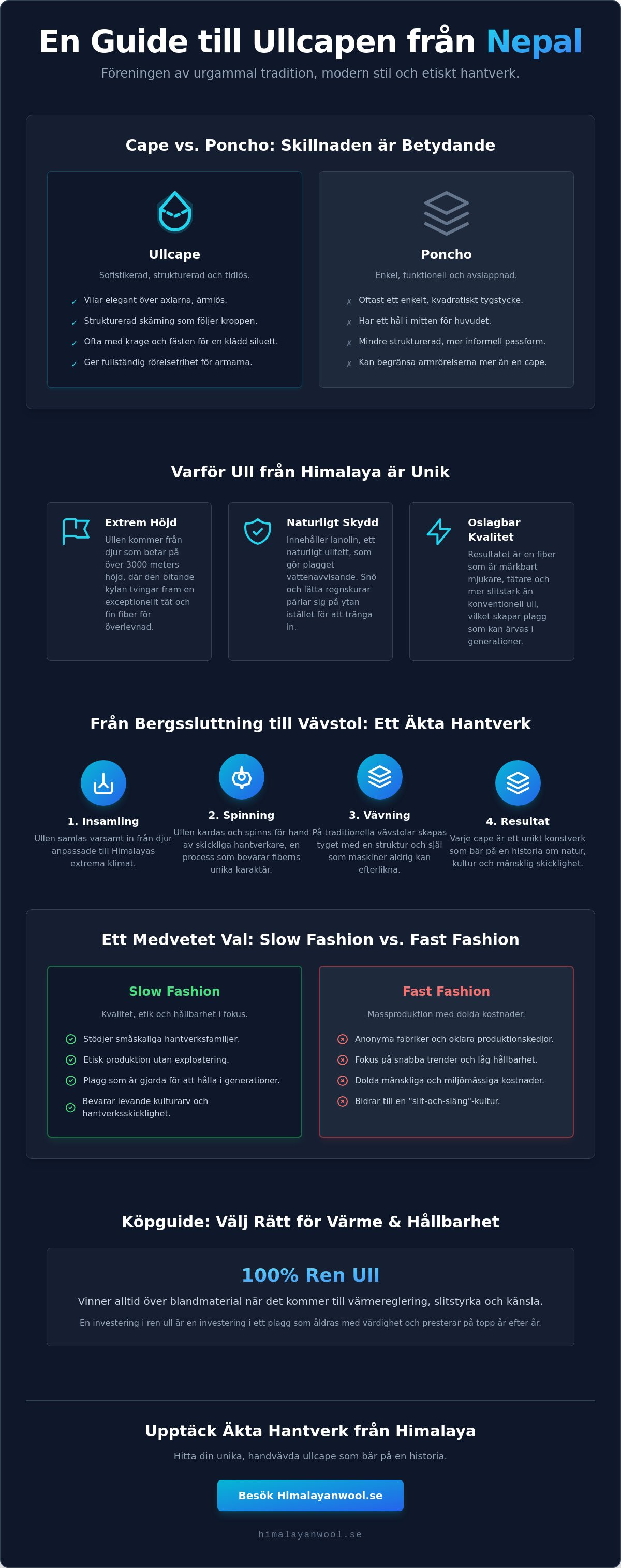
Why Nepal, in particular, has become synonymous with these high-quality garments is due to the rare combination of an extreme climate and a deep reverence for the raw material. The wool used has been shaped by nature's toughest conditions, resulting in a fiber with exceptional insulating properties. Many often confuse a cape with a poncho, but the difference is significant. While a poncho is often a simple, square piece of fabric with a hole for the head, a wool cape from Nepal has a more sophisticated and structured cut. It drapes elegantly along the body's lines and often features details such as a defined collar or discreet fastenings, providing a more dressed-up and timeless silhouette that works equally well in the city as in the countryside.
The cape as the ultimate layering garment
In the Scandinavian climate, where the weather often shifts between pale sunshine and icy winds in just a few minutes, the cape is an indispensable companion. Wool fibers possess a natural intelligence that helps regulate body temperature by breathing when it's milder and retaining warmth when the cold intensifies. You can easily wear your wool cape from Nepal over a thin blouse on early autumn days, or wrap it over a thick knitted sweater when winter's first frost nips at your cheeks. It is precisely the simplicity of being able to throw the garment over your shoulders that makes it so useful in an active everyday life.
Craftsmanship in every stitch
Every single garment carries its own soul and a unique story. Since each cape is hand-woven in small-scale ateliers, no two are ever completely identical. This rich Nepalese craftsmanship is the result of knowledge passed down through generations of artisan families in the mountain villages. By choosing a hand-woven cape, you not only support an individual and their family, but you also contribute to preserving a living culture that prioritizes quality and care over the quick profits of mass production. It is an investment in a garment that ages with dignity and only becomes more beautiful the more it is used.
The craftsmanship behind: Why Himalayan wool is unique
High above the clouds, where the air is thin and the cold biting, roam the animals that hold the secret behind a genuine wool cape from Nepal. At altitudes above 3,000 meters, nature has forced a unique adaptation in the goats and lambs that graze freely on the slopes of the Himalayas. To survive the extreme temperature differences, the animals develop a wool fiber that is significantly denser and softer than that found in animals in lower terrain. It is this natural engineering that makes the material so exceptional. The wool acts as a living barrier that keeps out frost but at the same time allows the skin to breathe on milder days. Nature is the primary architect here, and the result is a material that no factory can artificially recreate.
Another secret lies in lanolin, the natural wool grease that acts as the animals' own rain shield. By preserving some of this grease in the finished product, the garment gains natural water-repellent properties. This means that snow and light rain bead on the surface instead of immediately penetrating the fibers. Because these natural fibers are incredibly durable, garments are created that not only warm for the moment, but can be inherited for generations without losing their resilience or shape. This is sustainability that extends far beyond seasonal trends.
From mountain slope to loom
Every step in the manufacturing process is done with a gentleness that no machine in the world can replicate. After the wool is collected, it is carded and spun by hand by skilled artisans who know the character of the material in their fingertips. By using traditional looms, a structure is created that gives the fabric life and depth. To ensure you make a conscious choice, it is important to look for Ethical craftsmanship, as transparent production chains guarantee that neither child labor nor exploitation has occurred in the small-scale ateliers. If you want to know more about this journey, you can read our guide on Himalayan wool clothing.
Thermoregulation: Warmth without sweating
Unlike synthetic materials, which often trap moisture and create a stuffy feeling, genuine wool possesses an outstanding ability to wick moisture away from the body. This means you stay dry and comfortable whether you are taking a brisk walk or sitting still in a cool café. This natural function is why a wool cape from Nepal feels just as right indoors as outdoors. It breathes with you and adapts to your body temperature in an almost magical way. For a deep dive into how this works on a molecular level, we recommend our article on the properties of wool.
If you are looking for your next trusty garment in your wardrobe, you can explore our selection of wool products that combine tradition with timeless design.
Stylish warmth: How to wear your wool cape in everyday life
When the cool air sweeps over our Nordic cities, a wool cape from Nepal transforms from a functional mountain protection to one of the most versatile style statements in your wardrobe. The garment's ability to adapt to both environment and occasion makes it a trusted companion that blurs the line between practical gear and high fashion. In autumn, as the leaves change color, the cape creates a perfect balance between the rustic and the sophisticated. By combining it with a pair of durable jeans and sturdy boots, you get an earthy look that breathes both adventure and security.
The color palette of these garments often reflects the shades of the Himalayas themselves, from soft sand tones to deeper greys and browns. These natural pigments complement the minimalist Scandinavian wardrobe in a way that mass-produced clothes rarely achieve. Choosing this craft is an active stance for Slow fashion, where we value quality over quantity and choose garments that are made to last. For more festive occasions in winter, the cape can be worn over an elegant dress. Its sweeping form gives an aura of timelessness that a regular jacket often lacks. To complete the warmth and style, it's wise to match it with the right wool winter accessories, such as a soft hat or a pair of warm mittens.
Everyday comfort and freedom of movement
There is a practical freedom in the cut of the cape that is often overlooked in comparison to traditional outerwear. Unlike jackets with narrow sleeves, which can feel restrictive over a thick sweater, a wool cape from Nepal gives you full freedom of movement. This makes it the ideal choice for driving or when carrying heavy groceries through the city, as the fabric follows your movements instead of working against them. In addition, the flowing fabric creates a flattering silhouette that beautifully embraces all body types without compromising personal comfort.
Create a personal style
For those who want to vary their expression, there are many ways to put a personal touch on the garment. A belt at the waist can quickly transform the open cape into a more fitted and defined coat. On the coldest days, the cape works excellently as an extra warming layer over a women's wool jacket. By mixing different textures, such as the rough structure of the hand-woven wool against a smoother surface, you create a depth in your outfit that feels both well-considered and genuine. It's about letting the material's own character speak, while adapting it to the rhythm of your own everyday life.
Slow fashion in practice: Ethical craftsmanship from Nepalese families
In a world that spins ever faster, where trends are born and die in just a few weeks, a wool cape from Nepal stands as a silent protest against the fleeting. Choosing slow fashion is about consciously stepping out of the cycle of overconsumption that depletes both environment and people. In the Nepalese craft villages, time is not measured in seconds, but in the hours it takes for a human hand to guide the shuttle through the loom. By foregoing the uniformity of mass production, we make room for garments that carry a soul and a history, where every stitch testifies to a professional pride that stretches back generations.
The ethical dimension is the backbone of this craftsmanship. It is a given that those who create your cape work under dignified conditions. As part of Nepal's preparations for the country's graduation from Least Developed Country status in November 2026, the focus on responsible business and social compliance has been significantly strengthened. For example, extensive training sessions were conducted in Kathmandu in March 2026 with support from the ILO to ensure human rights in the production chain. By supporting small-scale producers, we ensure that artisans receive wages that respect their expertise. For the fiscal year 2025/26, the minimum wage for skilled workers in the textile industry has been set at 20,933 NPR, which is an important foundation for the families' security and their children's future.
What does slow fashion mean for us?
It is a journey of patience and respect for nature's own processes. It's about understanding that true quality cannot be rushed. By choosing a wool cape from Nepal, you also contribute to a cleaner planet. Unlike synthetic clothing, which releases microplastics into our oceans with every wash, pure wool is biodegradable and returns to the earth when its long life cycle finally ends. Do you want to learn more about how you can build a more sustainable wardrobe at home? Feel free to read our guide on slow fashion Sweden to deepen your knowledge.
Quality that touches the soul
There is a very special weight to a garment that has not been created by machines. The emotional connection to your cape grows when you know that it is the result of personal effort and unique artistry. The handmade details provide a sense of exclusivity that can never be mass-produced. It is an investment that does not need to be replaced next season, but instead becomes a faithful friend through the years. When you wrap yourself in the wool, you carry with you the warmth of the Himalayas and the pride of the families who wove it.
If you want to experience the difference between mass production and genuine craftsmanship, you can explore our ethically produced wool clothing and find a garment that speaks to both heart and conscience.
Find your perfect wool cape: A buying guide for conscious choices
Choosing a wool cape from Nepal means inviting a piece of the Himalayas' soul into your wardrobe. It is a decision that extends beyond momentary desires and lands in a wish for a garment that ages with dignity. To navigate the jungle of options, you need to listen to the material and understand the details of the craftsmanship. A genuine cape is not only beautiful to look at; it feels right against the skin and carries a weight that promises warmth for many years to come. It's about finding that balance where form meets function and ethics meet aesthetics in a way that feels genuine in every fiber.
When choosing materials, purity is absolutely crucial. A wool cape from Nepal made of 100% wool always wins over synthetic blends in the long run. While acrylic and polyester can provide initial softness, they lack the natural fiber's unique ability to breathe and regulate your body temperature. Synthetic materials also tend to lose shape and pill after just one season. Pure wool, on the other hand, possesses a natural resilience that allows the garment to recover after use. By choosing the pure material, you invest in a garment that retains its luster and insulating properties through decades of Scandinavian winters.
The fit of a cape is generous but still requires thought. You should consider how the garment drapes over your shoulders and how the length interacts with your own height. A longer model provides a more dramatic and warming silhouette that protects against the wind, while a shorter variant offers maximum freedom of movement in an active everyday life. The width should feel embracing without the garment feeling heavy or cumbersome. It is in the meeting between the fabric's drape and your own movements that the garment's true character emerges.
Checklist before purchase
- Origin and method: Always ask where and how the garment was made. Genuine craftsmanship is often evident in the small, beautiful irregularities that machines can never recreate.
- Wool's character: Feel the texture with your fingertips. It should feel alive and full. High-altitude wool is naturally soft, but it also carries a rustic feel that testifies to its origin.
- Detailing: Examine buttons, fasteners, and finishes. Handmade details and well-crafted edges are clear signs of production where quality has been given the time it needs.
Care for your investment
Wool is a living material that largely takes care of itself thanks to its natural lanolin. Instead of washing your cape, you should let it air outdoors in fresh air. This activates the wool's self-cleaning properties and lifts the fibres again so that the garment regains its elasticity. If you need to store the garment during the warmest months, it should be in a dark and cool place, preferably with some cedar wood to protect against moths. By caring for your cape with respect, you ensure that it remains as beautiful as the day you first wrapped it around you. Are you ready to find your new faithful companion? Discover our range of handmade wool capes here and choose a craft that warms both body and conscience.
Invest in a craft that warms throughout life
Choosing the right outerwear is about more than just keeping the cold away; it's about embracing a lifestyle where quality and ethics go hand in hand. We have explored how a wool cape from Nepal combines the raw forces of nature in the Himalayas with a thousand-year-old craft tradition. By understanding wool's unique thermoregulation and the value of slow fashion, you can make a choice that feels as good in the soul as it does against the skin. It is an investment in a garment that not only defies seasonal trends but grows in beauty with each year it accompanies you through life.
Each cape is a unique work of art, handmade by skilled artisans who manage a cultural heritage with pride and care. When you wrap yourself in the dense, soft wool, you carry with you the story of the mountains and the people who live there. Let your wardrobe reflect your values by choosing materials that are 100% natural and ethically sourced. Find your unique wool cape from Nepal at Himalayan Wool and experience the feeling of genuine, timeless design that lasts for generations. It's time to let nature's finest functional material and human craftsmanship give you the warmth you deserve.
Common questions about wool capes from Nepal
Is a wool cape from Nepal warm enough for Swedish winter?
Yes, a wool cape from Nepal is excellent for Swedish winter thanks to the dense fibres from animals living at extremely high altitudes. The wool effectively insulates against biting cold while allowing the skin to breathe. For the coldest days, it works perfectly as an outer layer over a thick sweater or a lighter jacket, creating an air gap that naturally binds warmth close to the body.
How do I best wash my handmade wool cape?
The best way to care for your cape is to air it outdoors in damp weather instead of washing it. The wool's natural fat, lanolin, causes the fibres to naturally repel dirt and odours. If you need to clean the garment more deeply, it should be done gently by hand in lukewarm water with a mild wool detergent. Avoid wringing out the fabric and instead let it flat dry on a soft towel to maintain its shape.
Does the wool from Nepal itch against the skin?
No, the wool from Himalayan goats and lambs is generally perceived as very soft and comfortable against the skin. Since the animals live in an extreme climate, they develop finer and more pliable undercoats to stay warm, resulting in a fibre that is less itchy than ordinary sheep's wool. Many who are otherwise sensitive to wool appreciate the smooth and supple feel of a hand-woven garment from the Nepalese mountain villages.
What is the difference between a wool cape and a wool poncho?
The difference lies primarily in the construction and silhouette of the garments. A poncho is usually a simple, square piece of fabric with a hole for the head that falls completely freely. A wool cape, on the other hand, is a more structured outer garment with a defined shoulder line and often an opening at the front, giving a more elegant and dressed impression. The cape offers the same freedom of movement as the poncho but with a more sophisticated shape suitable for all occasions.
Is the production of wool in Nepal animal-friendly?
Yes, the production is based on a deep respect for the animals that provide the raw material. Goats and lambs graze freely on the slopes of the Himalayas and live in harmony with the local nature and herding families. Since production is small-scale and craft-based, there is a personal care for the animals that is rarely found in industrial mass production. This ensures that the wool is used in an ethical and responsible manner with the well-being of the animals in focus.
How do I know my wool cape is genuine craftsmanship?
You recognize genuine craftsmanship by the small, beautiful irregularities in the weave that machines can never replicate. A handmade wool cape from Nepal often has a unique texture and vibrant colour variations that bear witness to the human hand behind the work. Also, check that the seller can account for the production chain and that the garment carries the special weight and quality that characterizes traditional Nepalese weaving techniques passed down through generations.
Can I wear a wool cape even during spring and autumn?
Absolutely, the cape is actually at its best during transitional periods when the temperature changes rapidly between morning and evening. Thanks to wool's natural ability to regulate temperature, it keeps you warm during cool walks without becoming stuffy when the sun comes out. It is an ideal garment to quickly throw over your shoulders when you need flexible protection that adapts to the day's changing weather and your own body heat.