

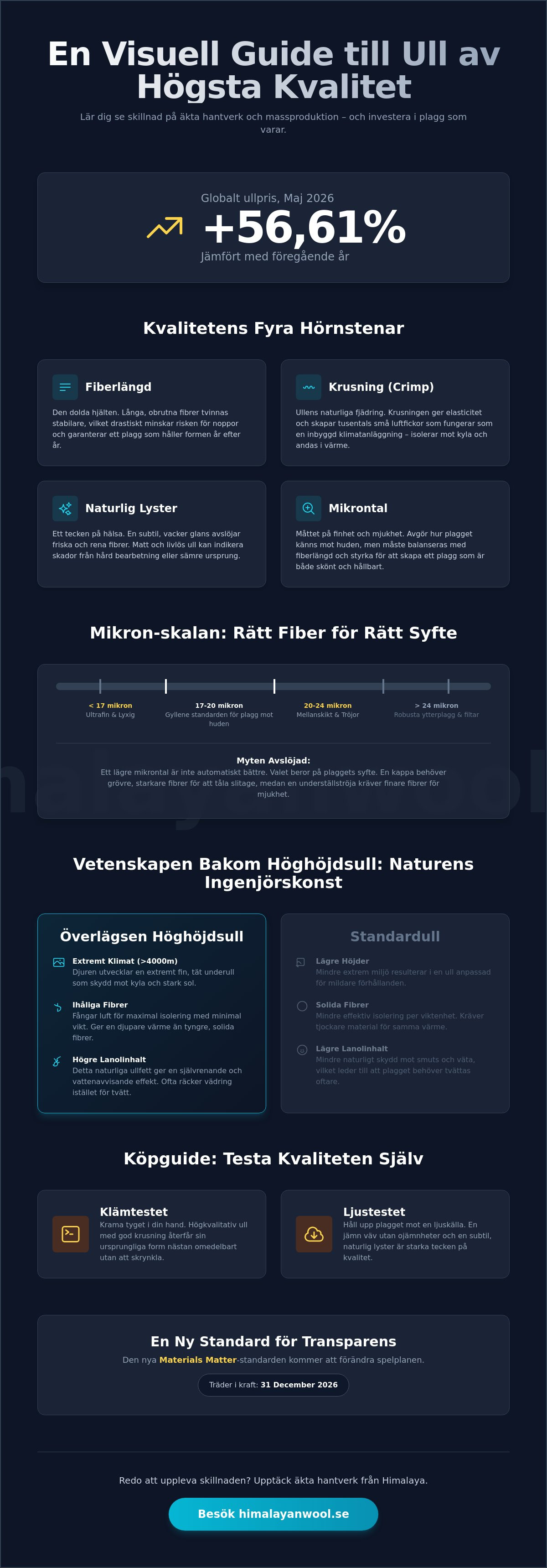
Did you know that the global wool price has surged by 56.61 percent since last year, according to figures from May 2026? This sharp price increase reflects a world that is rediscovering the true value of nature's own luxury fibers, but it also means that it has become harder than ever to find genuine, high-quality wool without getting lost among mass-produced alternatives. You probably recognize the frustration of a new favorite sweater that starts to pill after just a few weeks or wool that scratches and itches against the skin despite a high purchase price.
In this guide, you will learn to distinguish between industrial production and the genuine craftsmanship required to create garments that actually last for generations. I promise that after reading this, you will be able to identify quality on your own and understand why some fibers feel like a soft, warm hug from the mountains. We will cover everything from the importance of micron count to how the new Materials Matter standard, which comes into effect on December 31, 2026, will change the game for those who want to make a sustainable and ethical investment in their wardrobe.
Key Takeaways
- Learn how fiber length and natural luster work together to create durable garments that retain their beauty and shape year after year.
- Discover the science behind high-altitude wool and how extreme climates give the fibers a unique ability to regulate temperature and naturally self-clean.
- Get practical tools to perform simple squeeze and light tests that instantly reveal if a garment is genuine high-quality wool.
- Understand the specific differences between merino wool and cashmere to choose the right kind of luxury based on your personal needs and uses.
- Explore the profound value of traditional craftsmanship and why hand-spun fibers provide a unique character that industrial mass production can never replicate.
What truly defines high-quality wool?
Holding a garment crafted with respect for nature is like feeling the soul of Nepal in every thread. But what exactly makes one sweater feel like a soft cloud while another itches and loses its shape after just a few weeks? The answer lies in the unique symbiosis between biology and craftsmanship. Genuine high-quality wool is not solely defined by the thinness of the thread; it's about a combination of fiber length, a natural luster that beautifully reflects light, and a softness that only nature can produce.
Origin plays a crucial role in the final result. A fiber from an animal living on the windswept peaks of the Himalayas has developed entirely different protective properties than wool from the Spanish fields. To understand the entirety of Wool Quality and Properties, we need to look closer at how the fibers are actually structured. An important distinction is also the difference between virgin wool and recycled wool. While recycled wool is a great initiative for the environment, the process often means that the fibers are damaged and shortened. This makes the garment more prone to pilling and losing its strength over time. For those seeking an investment that lasts for generations, virgin wool is unbeatable. This is where the unique properties of wool truly shine, as the intact fibers retain their natural elasticity and resilience.
Micron Count: The Myth and the Truth
When talking about high-quality wool, it's easy to get fixated on numbers. The micron count indicates the fiber's diameter in thousandths of a millimeter, and this measure often determines the softness against the skin. There's a widespread myth that a lower number always means a better garment, but the truth is more nuanced. For a thin sweater worn directly against the body, 17 to 20 microns is the golden standard because it's fine enough not to irritate the skin. However, for outerwear like coats or robust vests, a slightly stronger fiber is often needed to give the garment the necessary structure and ability to withstand external wear and tear for many years.
Fiber Length and Crimp
Fiber length is the hidden hero behind a garment that doesn't pill. Long, unbroken fibers twist together more stably in the yarn and stay there instead of migrating to the surface and forming small, unsightly balls. The crimp acts as wool's natural spring. It gives the garment its elasticity so that it regains its shape after you've worn it. Furthermore, this natural crimp acts as a built-in air conditioning system. By trapping air in small pockets, the fibers insulate against both biting cold and intense heat, keeping your body temperature balanced throughout the day, regardless of the environment.
The science behind: Why high-altitude wool is superior
The extreme environment of the Himalayas creates conditions that no industrial facility can replicate. When animals live at altitudes above 4000 meters, they are forced to develop a natural defense against biting frost and strong sun. It is in this struggle against the elements that high-quality wool is born. Unlike industrially produced wool, high-altitude wool has a higher content of natural lanolin. This fat acts as a protective barrier and gives the fibers an amazing self-cleaning ability. You'll notice this because the garment rarely needs washing; it's usually enough to air it out in the fresh morning air for it to feel new again.
The scientific basis for these fibers is often confirmed by Official Wool Standards from the USDA, which categorize wool based on its fineness. In May 2026, we saw how the market values this quality higher than ever, with prices up to $8.65 per pound for 17-micron fine wool. This price trend reflects a global understanding that nature's most advanced materials cannot be rushed. The clean mountain air and natural, pesticide-free fodder also ensure that the fibers retain their natural strength throughout the processing.
Adaptation to Cold: Nature's Own Engineering
On the majestic mountain peaks, animals develop an extremely fine undercoat to survive the winter. This undercoat is significantly more sophisticated than the standard wool produced in lower-lying areas. The fibers are hollow, which creates a unique insulating ability. This means that garments made from this wool are lighter to wear yet provide deeper warmth than heavier, machine-made alternatives. It is nature's own engineering that allows a thin sweater to protect against sub-zero temperatures without feeling bulky.
The Ethical Factor in Fiber Quality
There is a direct link between animal welfare and the quality of their wool. In traditional Nepalese herding culture, animals roam freely, which reduces stress and results in glossier and stronger fibers. Small-scale production in Nepal is key to preserving high-quality wool, as the wool is gently handled by hand instead of undergoing aggressive machine washing and bleaching. Choosing wool clothing from the Himalayas is therefore about more than just style. It is a stance for a sustainable lifestyle where craftsmanship is given the time it needs.
When you invest in a handmade garment, you carry a story of generations of knowledge and respect for the mountains. You can discover the difference for yourself by exploring our hand-knitted wool sweaters that bear the traces of the master's hands and the soul of Nepal in every thread.
Comparison: Different types of high-quality wool
Each fiber carries its own story and its own purpose. Choosing high-quality wool is not just about softness against the skin, but about understanding how the animal's habitat has shaped the material for specific needs. While versatile merino wool is often the obvious choice for thin base layers thanks to its suppleness, cashmere offers an almost ethereal lightness. This luxury item is carefully combed from the undercoat of goats in the Nepalese mountains and provides warmth three times greater than regular sheep's wool despite its minimal weight.
For those seeking something more robust for cold winter days, local sheep's wool from the Himalayas is unbeatable for outerwear such as coats, ponchos, and vests. It possesses a natural resistance to wind and moisture that finer fibers often lack. A sustainable alternative gaining ground in 2026 is yak wool. It is not only 10 to 15 percent warmer than merino wool but also has a unique breathability that makes it ideal for an active life in both urban and natural environments. When experts describe How to evaluate wool, they often emphasize that the choice of type must match the garment's intended journey.
When to choose which type of wool?
The choice between different types of wool is a balancing act between durability and softness. For the office, cashmere and yak wool are unbeatable thanks to their elegant drape and luster. For hiking or gardening, merino wool or the coarser Himalayan sheep's wool is more practical as they can withstand more mechanical wear.
| Wool Type | Warmth | Softness | Best Use |
|---|---|---|---|
| Merino Wool | High | High | Base layers and everyday sweaters |
| Cashmere | Extreme | Highest | Luxurious scarves and fine suits |
| Himalayan Sheep Wool | Very High | Medium | Coats, vests, and outerwear |
| Yak Wool | Extreme | High | Durable sweaters and hoodies |
Blended materials: When is it acceptable?
In an era where raw material prices for high-quality wool have risen by over 56 percent in a year, we are seeing more and more "wool blends" in stores. It is important to distinguish between a technical blend, where, for example, a little silk is added for extra sheen, and an economic blend where the wool is diluted with cheap polyester or acrylic. Synthetic fibers do not breathe, attract odor, and destroy wool's natural ability to regulate temperature. At Himalayan Wool, we believe in "Slow fashion for real" and therefore prefer 100 percent pure natural materials. You can easily identify hidden synthetic fibers on the care label; if it states more than 10 percent nylon or acrylic, you start to lose the magical properties that make wool so unique.
Buying Guide: How to recognize quality with your senses
Identifying high-quality wool is an art form that requires you to tune out sales pitches and instead rely on your own senses. When you hold a garment in your hand, there are several effective ways to reveal its true nature. The first step is the so-called squeeze test. Grab a part of the fabric and squeeze it tightly in your hand for a few seconds. Genuine quality wool, with its natural crimp and elasticity as we mentioned earlier, should immediately spring back to its original shape without leaving deep wrinkles.
Then proceed with the light test by holding the garment up against a strong light source. Here you are looking for evenness in the knit or weave. An industrial product may look perfect on the surface but hide thin areas that will quickly wear out. Handmade garments from Nepal often have a unique density and character that testifies to the master's hands, rather than a soulless machine. Don't forget the smell test either. Nature's luxury fibers often carry a faint, earthy scent of lanolin. If the garment instead smells sharply of chemicals, it's a sign of aggressive bleaching processes that have damaged the fibers' natural protection and strength.
Reading between the lines on the label
When you examine the care label, you often encounter the term "Virgin Wool" or new wool. This means that the wool has never been processed or recycled before, ensuring that the fibers are intact, long, and strong. Certifications like the upcoming Materials Matter standard are valuable for animal welfare, but they rarely tell the whole story of human craftsmanship. For us at Himalayan Wool, transparency about the origin in Nepal is crucial. By knowing that your sweater is created under fair conditions, you gain a sense of security that no mass-produced label can replace.
Price vs. Value: The Investment in Slow Fashion
In a world of fast trends, it's easy to be tempted by a low price, but the real economy lies in durability. If you calculate the "cost-per-wear" for a handmade wool jacket that lasts 20 years, the cost per use becomes minuscule compared to a synthetic garment that loses its shape after one season. Embracing slow fashion Sweden is about choosing quality over quantity and building a wardrobe that breathes respect for both artisans and the environment. A well-maintained jacket of high-quality wool actually becomes more beautiful with age as the fibers soften and adapt to your body.
Do you want to experience the difference yourself? Familiarize yourself with our range and find your next lifetime garment among our unique, handmade collections.
Himalayan Wool: Traditional craftsmanship meets highest quality
Behind every garment in our collection lies a story that stretches over thousands of years and through generations of Nepalese families. It is here, in the shadow of the majestic mountain peaks, that the raw material meets the skilled hands of our local artisans. Our philosophy is simple but profound: we bring together the raw power of nature with the timeless wisdom of tradition. By working directly with herders and weavers, we ensure that every fiber of high-quality wool is refined with the respect it deserves. This is about "Slow fashion for real," where we refuse to compromise on either animal welfare or the working conditions of the artisans.
From the mountains of Nepal to your wardrobe is more than just a journey; it is a journey where every step is characterized by human presence. We see our artisans as partners and masters who carry an invaluable cultural treasure. By choosing our products, you support fair trade that gives these families the opportunity to preserve their traditional methods while securing a stable livelihood.
The art of hand spinning and weaving
In a world dominated by fast machines, we deliberately choose a more thoughtful path. We prefer hand-spun wool because it is the only way to truly preserve the fiber's natural properties. When wool is hand-spun, the microscopic air pockets that machine processing often compresses or destroys are preserved. These air pockets are crucial for the wool's ability to insulate and breathe at the same time. This means that a hand-knitted sweater or a woven poncho from us not only feels more alive against the skin; it also functions better as a functional protection in the varying Nordic climate.
Every garment gets a unique texture that tells the story of the person who created it. Small variations in thread thickness and the use of traditional patterns are not defects. They are signatures from the master's hands. By preserving these techniques, we protect a cultural heritage that risks disappearing in the age of industrial mass production.
Your next step towards a sustainable wardrobe
Investing in garments of high-quality wool is an active choice for a more conscious future. For those who want to start building a wardrobe that lasts, a handmade wool jacket or a robust hoodie is the ultimate investment. These garments are designed to withstand both the test of time and the most demanding weather conditions. With proper care, they become faithful companions that you can wear for decades and even pass on to the next generation.
Our collections include everything from warming hats and socks to elegant coats and ponchos. Each product is proof that luxury and ethics can go hand in hand. Take the step today and feel the genuine difference that true craftsmanship makes for your everyday comfort.
Discover our collection of handmade wool clothing from Nepal and find your new signature garment that carries the soul of the Himalayas in every thread.
Choose a future woven with care
Now that you know how to distinguish between industrial production and genuine craftsmanship, you have the tools to make choices that feel as good in the heart as they do against the skin. Investing in high-quality wool is about more than just buying a garment; it is a statement for a slower lifestyle where nature's resources and human knowledge are valued higher than fleeting trends. By trusting your senses and choosing fibers cultivated in the clear air of the Himalayas, you create a wardrobe that breathes respect for both tradition and the future.
Each thread in our collections carries a story from the mountains. Our garments are handmade in Nepal by local masters and consist of 100% natural wool from highland pastures. They are designed to last for generations and become more beautiful with each passing year. It's time to let the soul of Nepal take its place in your everyday life and experience the warmth that only genuine craftsmanship can provide. We look forward to helping you find your next favourite garment that stands the test of time.
Experience the difference with the highest quality wool – See our collection
Frequently asked questions about wool and quality
Which type of wool is considered the absolute highest quality?
Cashmere from the soft undercoat of goats in the Himalayas is often considered the premier quality due to its extreme lightness and warmth. Another contender that has grown in popularity during 2026 is yak wool, which is 10 to 15 percent warmer than merino wool. Both of these varieties represent the highest quality wool by offering a unique combination of softness and durability that industrial fibres cannot match.
Why does some wool itch while other feels as soft as silk?
The sensation of itching is primarily due to the fibre's diameter, measured in microns. When a fibre is coarser than 25 microns, it doesn't bend against the skin but instead pricks the nerve endings. Fine wool from highland animals often measures between 17 and 20 microns. This makes it feel silky soft and comfortable even for people with very sensitive skin.
How do I know if a wool sweater will pill?
The risk of pilling is determined by the fibre length and how well the yarn has been spun before knitting. Short fibres, often found in mass-produced or recycled garments, easily migrate to the surface and form small balls. By choosing hand-spun garments with long, unbroken fibres, you significantly reduce the risk of pilling, as these fibres are securely anchored in the yarn's core.
Is more expensive wool always better?
A high price is no guarantee, but extremely cheap wool often hides quality defects or ethical issues. With a price increase of 56.61 percent for raw wool over the past year, according to statistics from May 2026, it is unreasonable to expect genuine highest quality wool at a low price. The value lies in durability; a garment that lasts 20 years is a better investment than a cheap sweater discarded after one season.
What is the difference between merino wool and lamb's wool?
Merino wool comes from a specific breed of sheep known for its extremely thin and crimped fibres, while lamb's wool is the very first shearing from a young sheep, regardless of breed. Lamb's wool is very soft but has shorter fibres, making it less durable than mature merino wool. For garments intended for daily use across generations, long-fibre merino wool is often the more sustainable choice.
How does the Himalayan climate affect wool quality?
The extreme temperature fluctuations at over 4000 meters altitude force the animals to develop fibres with unique insulating properties. The thin air and cold climate make the wool more crimped and give it a higher content of natural lanolin. This results in a fibre that is both lighter and more resistant to dirt than wool from animals living in milder environments at lower altitudes.
Can you tell the difference between handmade and machine-made wool?
Yes, handmade wool has a living texture with small, natural variations that are absent in its machine-made counterpart. Machines often compress the fibres to achieve perfect uniformity, which destroys the insulating air pockets. A hand-spun garment from Nepal's masters feels fuller and breathes better, as the artisan's careful hands preserve the wool's natural elasticity throughout the process.
Why are sustainability and quality so closely linked when it comes to wool?
Sustainability and quality are two sides of the same coin because a garment that doesn't break is the most environmentally friendly choice. High-quality natural fibres are biodegradable and do not contribute to microplastic pollution, unlike synthetic blends. When you choose a sweater designed to last for 20 years, you reduce your overall consumption and show respect for the resources nature has bestowed upon us.