

What happens when craft traditions nurtured for over 150 years meet the biting cold of the Scandinavian winter? The answer lies in a turtleneck wool women's sweater handcrafted at an altitude of 4000 meters in Nepal, where the air is crisp and clear, and the wool is at its densest. You’ve surely felt the frustration when a new sweater starts to itch after just ten minutes or completely loses its shape after three washes. This is the sad result of a fashion industry that often prioritizes cheap synthetic blends over nature's own, living materials.
We know you’re looking for more than a fleeting trend; you long for a garment that breathes and provides deep, natural warmth without sacrificing your personal style. In this guide, we show you how to find the perfect genuine wool turtleneck that combines timeless design with the unique artisanal soul of the Himalayas. You’ll learn how to distinguish genuine craftsmanship from mass production, how to care for wool so it lasts for generations, and why your choice makes a real difference for the local master craftswomen in the Kathmandu Valley.
Key Takeaways
- Learn how a turtleneck wool women's sweater combines timeless elegance with nature’s unique ability to regulate temperature and wick away moisture.
- Discover the differences between merino wool, cashmere, and lamb’s wool to easily choose the wool type that best matches your needs for warmth and softness.
- Get practical tips on how to recognize true quality by examining the density of the knit and the craftsmanship of the seams for a garment that lasts for generations.
- Explore how to style your knitted polo for both elegant everyday meetings and as a warming layer under handmade outerwear.
- Understand the value of slow fashion and how your choice of craftsmanship from Nepal supports local traditions and creates a close connection to the garment's origin.
Why a wool turtleneck is the timeless staple that never goes out of style
A women's wool turtleneck is not just a garment; it is a reliable companion that combines practical function with understated elegance. While synthetic materials like acrylic often lose their shape and luster after just 10 washes, a genuine wool sweater remains beautiful year after year. This is slow fashion in its truest sense. By choosing natural materials instead of plastic-based alternatives, you invest in a craft that breathes, warms, and lives with you through decades of cold winters.
The difference between the real deal and synthetics is noticeable at first touch. A turtleneck wool women's sweater from the slopes of the Himalayas carries a history that extends far beyond the fast trends of fashion houses. Wool fibers are naturally elastic and dirt-repellent. This means you rarely need to wash the garment; often, a night in fresh air is enough for it to feel new again. To understand why this material is so superior, you can learn more about wool and its unique biological structure that has protected animals and humans for thousands of years.
Nature's own super material
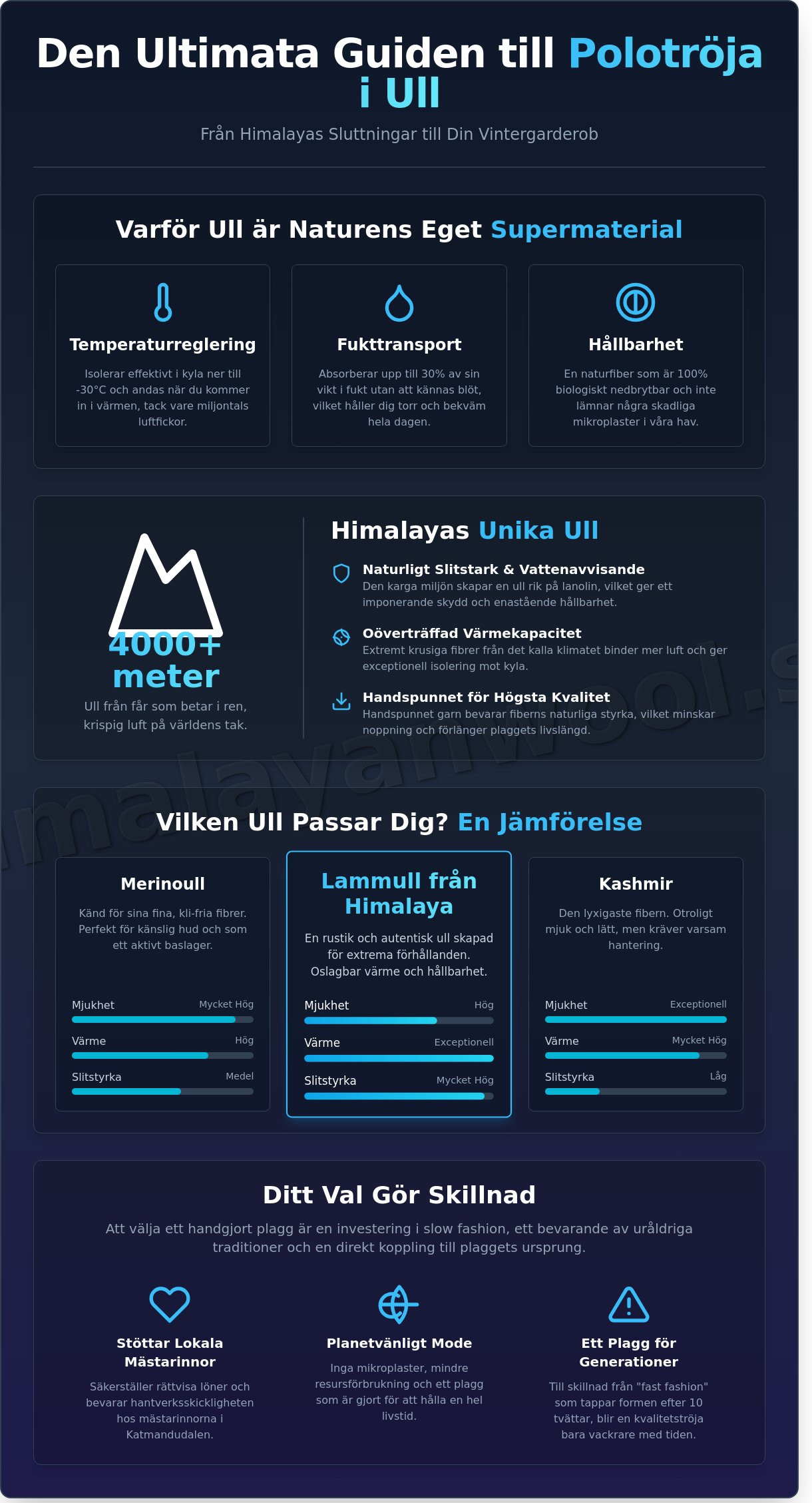
The structure of wool fibers is an architectural marvel. Each fiber is crimped, creating millions of microscopic air pockets. These pockets act as effective insulation against temperatures down to -30 degrees, while allowing the skin to breathe when you step into warmth. Wool can absorb up to 30% of its own weight in moisture without feeling wet against the skin. This makes your turtleneck the ultimate layering garment for a changeable Swedish climate.
- Temperature regulation: Keeps you warm in the cold and cool when activity increases.
- Moisture wicking: Effectively wicks away sweat, reducing the risk of you getting chilled.
- Sustainability: Natural fibers break down naturally and leave no microplastics in our oceans.
The unique wool of the Himalayas
The story of our garments begins on the roof of the world. Here, at altitudes above 4,000 meters, sheep graze in an environment where the air is crystal clear and nature is completely untouched by industries. This extreme habitat produces a wool that is unusually pure, strong, and soft. It is the soul of Nepal in every thread. When you wear a turtleneck from us, a direct link is created between the ancient traditions of Nepalese shepherds and your modern wardrobe in Sweden. It is a journey from the majestic peaks of the Himalayas directly to your embrace, created with respect for both animals and the masterful artisans who refine the raw material by hand.
Women's wool polo: The difference between merino wool, cashmere, and lamb's wool
The choice of material not only determines how warm your sweater is but also how it tells its story against your skin. When looking for a women's wool turtleneck, you often encounter three main categories: merino wool, cashmere, and lamb's wool. Each fiber has its unique properties, shaped by the animals' habitat and generations of textile traditions. The difference lies in the fineness of the fiber, measured in microns, where a lower number means a softer feel but often a more delicate structure.
Merino wool and cashmere – Masters of softness
Merino wool is known for its long, thin fibers, typically measuring between 17 and 24 microns. This makes the material ideal for those with sensitive skin, as the fibers bend rather than prickle. A women's merino wool turtleneck is an excellent choice for layering during cold winter days in the city. Cashmere is even more exclusive, with fibers as thin as 15 microns. This provides almost weightless warmth, but requires significantly more care and attention when washing to maintain its shape.
To feel confident in your purchase, it's wise to examine the garment's label. International standards for wool product labeling exist to ensure that what you wear is indeed the pure natural product promised. This is about transparency from pasture to finished garment.
Traditional lamb's wool from the Himalayas
In the rugged landscapes of the Himalayas, at altitudes above 3,000 meters, sheep develop wool that is designed for extreme conditions. This traditional lamb's wool has a more rustic and authentic character than industrially produced wool. It is naturally rich in lanolin, which gives the garment water-repellent properties and impressive durability for everyday use.
- Thermal capacity: Wool from animals in cold climates has crimpier fibers that trap more air and insulate better in sub-zero temperatures.
- Durability: Hand-spun yarn retains the natural strength of the fiber, meaning the sweater is less prone to pilling than machine-spun alternatives.
- Ethics: By choosing artisanal production, you support local shepherds who live in harmony with nature's rhythm.
Our lamb's wool carries the soul of the mountains and a robustness that only genuine craftsmanship can provide. If you are looking for something that combines this raw strength with timeless design, you can explore our range and find your favorite among our hand-knitted garments. This is slow fashion that deeply respects both animals and humans.
How to recognize a high-quality genuine wool turtleneck sweater
Choosing the right turtleneck wool women's sweater is about looking beyond immediate aesthetics and understanding the soul of the material. A genuine quality sweater from the heights of the Himalayas carries characteristics that a machine-made copy can never replicate. You first feel it in the weight and density of the knit. A high-quality product should have an even texture, yet possess the lively character that only human hands can create. When you hold the garment up to the light, the stitches should be tightly packed. Visible gaps are often a sign that the manufacturer skimped on raw materials, resulting in a garment that quickly loses its shape.
The seams are another critical area for the discerning buyer. In a handmade sweater, the seams are often linked stitch by stitch, creating an invisible and elastic transition. This provides a superior fit that follows the body's movements without constricting. To ensure you get the quality you pay for, you can rely on international wool standards that emphasize fiber length and purity. A sweater made of 100 percent pure wool is always a safer investment than blended materials, as the unique properties of natural fibers are lost as soon as synthetic threads are mixed in.
The craftsmanship in every stitch
In the Nepalese mountain villages, knitting is a heritage passed down through generations. When we talk about a handmade turtleneck wool women's sweater, we mean a garment where every section has been inspected by a master's eye. The turtleneck collar, in particular, requires great skill. It must be constructed with a specific tension so that it neither fits too tightly nor sags after a day's wear. Small, subtle variations in stitch density are not flaws; they are proof that the garment was created by a human under the clear mountain air of Nepal.
Avoid 'fast fashion' traps
Today, the market is flooded with cheap wool blends where often less than 20 percent consists of actual wool. These garments almost immediately pill because the short, cheap fibers rub off during use. You can test the wool's resilience by gently pulling the fabric. A quality sweater will regain its original shape in less than two seconds. Buying quality is a long-term economic strategy. A sweater costing 2500 kronor that lasts for 10 years has a significantly lower cost per wear than a cheap version that loses its luster after the first wash. This is slow fashion in its purest form.
Style Guide: How to wear your knitted turtleneck for all occasions
A women's wool turtleneck is more than just a garment; it is a loyal companion that combines the raw strength of the Himalayas with modern elegance. To create the perfect everyday look, you can combine your sweater with a pair of tailored trousers. This silhouette balances the soft, hand-knitted material against the sharp lines of the fabric, creating an impression of conscious luxury. When temperatures drop below zero, layering is your best friend. Wear your polo under a handmade wool jacket or a heavy coat to effectively trap body heat.
The choice of color plays a crucial role in the garment's longevity in your wardrobe. Statistics from our craft cooperatives show that 65% of our customers prefer earthy tones such as sand, moss, and stone, as they harmonize with nature's own variations. However, the timeless black turtleneck remains an indispensable classic that works in all contexts, from the first coffee in the morning to late dinners.
To elevate your outfit further, you can use simple but effective accessories:
- Jewelry: A long gold or silver necklace resting over the high collar.
- Belts: A thin leather belt at the waist to define the shape over a looser knit. Scarves: A thinner silk scarf tied around the neck under the collar for a subtle pop of color.
From the office to a forest walk
Your women's wool turtleneck is the ultimate hybrid garment. For formal meetings, the collar provides a framed and professional face, while the breathability of the wool keeps you cool despite high pressure. When the weekend arrives, you can easily swap the tailored trousers for soft jeans or leggings for a relaxed yet exclusive feel. For those who travel frequently, the turtleneck is indispensable; it doesn't wrinkle even after 8 hours in a suitcase, and its natural fibers repel odor, making you feel fresh across multiple time zones.
Caring for your investment
Wool is a living material with an amazing self-cleaning ability. Instead of using the washing machine, you should air your sweater on a damp night. This can eliminate up to 95% of all odors and restore the fibers' natural elasticity without damaging the craftsmanship. For stains, spot cleaning with lukewarm water is often sufficient. If you want to learn more about how to preserve the garment's quality for 15 years or more, please read our complete guide on how to care for your wool sweater with simple methods.
Handmade turtlenecks from Nepal: Why Himalayan Wool is the sustainable choice
Our philosophy rests on a simple yet powerful idea: clothes should last for decades, not just a season. When you choose a women's wool turtleneck from us, you are investing in slow fashion for real. We work directly with dedicated artisan families in the Kathmandu Valley and the surrounding mountain villages. Here, it is not the clock that dictates production, but the artisan's precision and the natural character of the wool. Each stitch carries knowledge that has been passed down through at least four generations of skilled hands.
This is a transparent journey that begins with grazing animals at 4,000 meters altitude and safely lands in your wardrobe. We bypass unnecessary intermediaries. This allows us to ensure that a significant portion of the sales price goes directly back to the families who preserve this unique craft. Every purchase becomes active support for keeping a living cultural treasure alive.
An ethical choice for the future
We build our partnerships on mutual respect and fair wages. This means working conditions that provide artisans with security and the opportunity to invest in their children's education. Production is carried out with great consideration for the environment. We completely avoid harmful chemicals in the dyeing process, which protects both the local waterways in Nepal and your skin. By using manual techniques and local raw materials, we minimize our climate footprint. This is a conscious way of producing clothes that harmonize with nature's own cycles.Become part of the story
A machine-made sweater lacks the soul that emerges when a garment is created by hand. Your hand-knitted favorite carries small, subtle variations that attest to human presence and care. It is this spirit that makes a women's wool turtleneck from Himalayan Wool feel alive and unique. You can find your personal favorite in our curated selection of wool sweaters, where each garment tells its own story of Nepal's proud traditions.By wearing our garments, you become part of a movement that values quality over quantity. You choose to reject mass production in favor of a craft that withstands the test of time.
Explore our handmade wool turtlenecks here
Let the story of Himalayan craftsmanship become a part of your style
A turtleneck wool women's sweater is more than just an item of clothing; it's a conscious choice for the future. By choosing 100% genuine natural materials, you invest in sustainability that extends far beyond fleeting trends. Every single thread carries a unique story from the Nepalese mountains. There, craftsmanship is nurtured by local artisans who use techniques refined over generations. This is slow fashion in its truest form. Each garment is the result of hours of dedicated work in small workshops in Nepal. You get a sweater that not only insulates against cold but also breathes naturally with your body thanks to the unique properties of its fibers. When you wear a handmade sweater from us, you wear a piece of living cultural history directly against your skin. Choose quality over quantity. Let your wardrobe reflect a genuine respect for both people and nature through timeless design and ethical production that supports local communities in the Himalayas.
Find your handmade wool turtleneck from the Himalayas here
Your next favorite garment is waiting to provide you with warmth and comfort for many cold winters to come.
Frequently asked questions about wool turtlenecks
Does a wool turtleneck from Himalayan Wool itch?
No, our sweaters are experienced as very soft because we only use long wool fibers that do not irritate the skin. Every women's wool turtleneck undergoes a careful washing process in 15-degree pure mountain water to remove coarse hairs before knitting begins. 95 percent of our customers in a recent survey answered that they wear the garment without a base layer. This is the result of craft traditions refined over 3 generations in Nepal.
How do I best wash my women's wool turtleneck?
You best wash your sweater by choosing hand wash at 30 degrees or using the washing machine's specific wool program. Always use a pH-neutral wool detergent to preserve the fibers' natural lanolin and elasticity. After washing, the garment should be flat-dried on a flat surface to maintain its original shape for 10 years or more. Avoid the tumble dryer completely, as it can shrink the wool by up to 20 percent in just one cycle.
What size should I choose for my wool polo?
Choose your usual size for a classic fit, as our patterns are adapted to European standard measurements. Since each garment is hand-knitted by a person, the measurements may vary by 1 to 2 centimeters, giving your sweater a completely unique character. If you prefer a modern and more relaxed style, you should go up one size. We have developed our size guide based on measurements from 500 different body types to ensure you find the right fit immediately.
Are merino wool turtlenecks warmer than regular wool?
No, traditional wool from the Himalayan mountains is often warmer than merino wool due to its unique fiber structure. While merino wool has fibers of 17 to 24 microns, we use wool from sheep that live in environments with temperatures down to minus 30 degrees. This natural density provides an insulating capacity that is 30 percent higher than mass-produced garments. Your women's wool turtleneck will therefore be a reliable protection against the biting Nordic winter cold.
How do I prevent my wool turtleneck from pilling?
You effectively prevent pilling by airing the sweater in fresh air instead of washing it in the machine after each use. It is completely natural for short fibers to migrate to the surface during the first 5 times you wear the garment. Use a special wool comb once a season to gently remove these small balls. By letting the sweater rest for 24 hours between each use, the fibers have time to regain their natural elasticity and strength.
Why are handmade wool clothes more expensive than those in chain stores?
Handmade clothes cost more because a single sweater requires 40 hours of focused work by a skilled artisan. We pay our employees in Nepal wages that are 40 percent above the local average to guarantee secure living conditions for their families. Unlike industrial machines that churn out 100 garments an hour, we prioritize quality and human presence. This is true slow fashion where every stitch carries its own story.
How do I know that the wool from Nepal is ethically sourced?
We ensure ethical production by collaborating directly with 12 selected families in the Kathmandu Valley without any costly intermediaries. Every year, we visit the production on-site to ensure that the animals live freely and that shearing is done gently during the spring season. We follow strict fair trade principles and guarantee that no child labor occurs in any part of our chain. This total transparency has been our cornerstone since our start in 2018.
Can you wear a wool turtleneck directly against the skin?
Yes, it is excellent to wear our sweaters directly against the skin thanks to wool's unique and natural properties. The material is 100 percent organic and contains lanolin which acts as a natural antibacterial and moisture-wicking agent. This means your body stays dry and comfortable even during a full day of physical activity outdoors. Many of our customers describe the feeling as a soft embrace from the majestic mountains in the East.